

Alexandra Robuste, Showcased By Influential Women, Redefines Leadership Through Neurodivergence And Practical Change
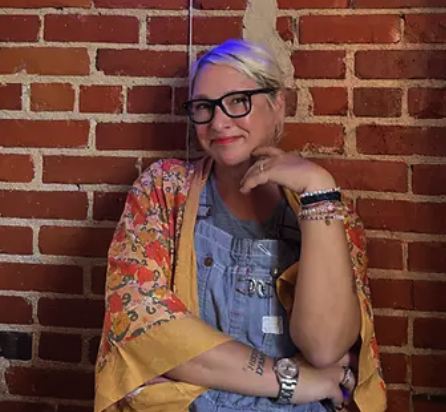
Venice, California – Alexandra Robuste never set out to become an expert in neurodivergence. She set out to understand something much more fundamental: why so many brilliant people were struggling inside systems that were supposedly designed to support them.
The answer, unexpectedly, was sitting at her own kitchen table.
It started with her son. Watching him move through the world — the friction, the misunderstandings, the gap between who he clearly was and what systems kept telling him he should be — something cracked open in Alexandra. She began looking more closely. And in looking at him, she began to see herself.
The recognition didn’t stop there. It moved backwards through generations: her own diagnosis of AuDHD in her mid-forties, then the realization that she could see the same patterns in her mother. And then her grandfather — a man she had loved and cared for, who had carried something she now finally had language for.
That moment of generational recognition — the way a single diagnosis can illuminate an entire family history — became the emotional core of everything Alexandra has since built. She realized she had already been applying many neuroinclusive principles for nearly two decades.
She simply had not yet had the language to describe what she was doing.
Her sons gave her that language. From there, curiosity became research, research became frameworks, and those frameworks became practical tools designed to help organizations create environments where more people can perform at their best.
“It wasn’t personal. Understanding that changed everything — for him, for me, for how I see every person who has ever been told they are too much or not enough.”
Today, Alexandra is the founder of the Alexandra Robuste Leadership Academy, creator of the Gentle Leading™ framework, and author of Gentle Leading and Neurodivergence- Inclusive Leadership, published by Routledge in 2025. Her work challenges traditional assumptions about leadership and reframes cognitive diversity not as a problem organizations need to accommodate, but as intelligence they may already be wasting.
Through Gentle Leading™ and her SNIP™ toolkit — including her coaching cards — Alexandra has developed more than 350 practical tools spanning six domains. The toolkit emerged from a simple question that led her down a deep research rabbit hole: how could neurodivergence be explained clearly and practically?
SNIP™ (Systemic Neurocognitive Indexing Protocol) became the answer: map the friction, understand what may be driving it, and design conditions that make access easier.
Rather than stopping at definitions, Alexandra went back to the brain networks themselves. She mapped patterns, explored how they influence behavior and workplace experiences, and continued researching until a complete, usable system emerged.
Crucially, all of Alexandra’s tools, frameworks, and resources are free and accessible for personal use. That is not a marketing strategy. It is a commitment: to make a difference by delivering supportive material directly to the people who need it most, regardless of what they can afford. The tools are intentionally neutral and designed for every brain — not exclusively for neurodivergent individuals, but for anyone navigating a world built for one type of mind.
That philosophy has become central to her global work with organizations, HR teams, and leadership groups. Alexandra conducts organizational assessments, develops practical tools, interviews professionals, and continues to deepen her research into human variation at work. At the same time, she is writing her second book.
Her growing body of work has already attracted recognition from academic leaders around the world, including a book award and an invitation to contribute to a forthcoming volume focused on systemic talent management.
Yet Alexandra’s path to this point has been anything but conventional.
Success Without a Traditional Academic Path
Alexandra attributes much of her success to curiosity—and to refusing to allow the absence of a university degree to determine the value of what she could contribute.
She never finished college in Germany. There is no PhD after her name. Nevertheless, her published research and practical leadership work have opened doors she once could not have imagined, including invitations to teach at universities and contribute to academic publications.
Imposter syndrome still visits.
Alexandra simply refuses to let it take the wheel.
One experience particularly crystallized how far her work had come. A professor widely regarded as one of the most influential figures in coaching and leadership since the 1970s reached out to Alexandra on LinkedIn after reading her book. He praised her work and invited her to contribute a chapter to his new volume.
During their initial Zoom conversations, Alexandra did not know who he was or fully understand the weight of his reputation within the field. She was simply herself: relaxed, direct, and curious. She got the chapter. Only afterward did she discover just how significant the opportunity was. Her immediate reaction was a combination of intimidation and pride.
For Alexandra, that moment represents the journey she continues to embrace: questioning assumptions, following curiosity, and allowing the quality of her work—not conventional credentials—to speak for itself.
Challenging the Status Quo
The career philosophy behind Alexandra’s work can be traced to an idea associated with Steve Jobs: always challenge the status quo.
It is a principle she applies to virtually every system she encounters.
Her starting question is simple: Why are they doing it this way, and does it actually work for the humans inside the system?
From there comes another personal rule: “no” and “impossible” are not answers.
There is always a solution.
Sometimes that solution is surprisingly small. It might mean changing the way a meeting is structured, adjusting how feedback is delivered, or communicating a deadline differently.
But those seemingly minor changes can have an immediate impact.
Alexandra has seen the moment when people’s shoulders drop because a system has suddenly become easier to navigate. That is what motivates her: small shifts that create a big exhale.
For her, effective leadership does not always require dramatic transformation. Sometimes it requires noticing the point of friction that everyone else has learned to ignore—and changing it.
A Message for the Next Generation of Women Leaders
Alexandra’s advice to young women entering her industry is equally direct.
Know who you are. Know your boundaries. And hold those boundaries with confidence.
She encourages women not to allow other people to speak for them or define their capabilities. Mansplaining, doubt, and attempts to diminish their voices may appear along the way, but they do not have to become part of the story.
She also emphasizes nervous-system regulation as an essential leadership skill.
For Alexandra, staying regulated is not simply about wellness. It is about maintaining the capacity to respond rather than react, remain grounded rather than shrink, and make decisions from a place of clarity.
Then comes visibility.
Women need to put themselves out there, speak up, take up space, and allow their expertise to be seen—even when imposter syndrome is loud.
The world cannot champion what it cannot see.
Turning Neurodivergence Into Competitive Advantage
Alexandra believes the biggest opportunity in her field is changing the way society understands neurodivergence.
Too often, public perceptions remain limited to stereotypes: the child who cannot sit still, the employee who struggles with conventional workplace expectations, or the individual who needs to be managed differently.
Those narratives overlook the extraordinary capabilities that can accompany different ways of thinking, including hyperfocus, pattern recognition, creativity, and deep systems thinking.
Alexandra argues that these capabilities represent untapped potential.
The cost of outdated systems is not merely emotional or cultural. It is economic. Organizations can lose innovative thinkers because their structures were never designed to support different cognitive styles.
Many companies already recognize the business case for neuroinclusive design. The challenge is turning recognition into action.
That is the gap Alexandra is working to close.
Her goal is not to position neuroinclusion as charity or compliance. It is to demonstrate that designing better systems for human variation can become a business imperative.
Meaning at the Center of Everything
At the heart of Alexandra’s work is one value: meaning.
That value extends beyond leadership and neurodiversity into her commitment to neurological health. Alexandra volunteers with Kill Parkinson’s, a global initiative using data and patient registries to accelerate treatment and research.
The cause is deeply meaningful to her. Alexandra previously worked as a nurse in Germany and has seen the severe stages of Parkinson’s disease firsthand. Her grandfather also had Parkinson’s. Later, she learned that a former colleague, diagnosed with early-onset Parkinson’s at a young age, had founded an NGO dedicated to fighting the disease differently.
Alexandra immediately wanted to help.
The initiative uses a gamified patient registry designed to keep participants engaged while collecting valuable information that traditional research may not capture—including environmental and geographic factors such as where people grew up and what pesticides were used in their surroundings.
Combined with AI, this data has the potential to contribute to better understanding, treatment, and ultimately the search for a cure.
The connection to Alexandra’s leadership work is unmistakable: understand the system, gather better information, identify patterns, and create something practical from what you learn.
That philosophy also defines her approach to neurodiversity.
It is not enough to identify a problem. People need tools they can actually use—in their workplaces, their relationships, their bodies, and their daily lives.
Alexandra is building those tools with a clear objective: make clarity, psychological safety, and sustainable performance possible for more people.
Her vision is ultimately simple, but ambitious. Better systems. More understanding. Less unnecessary friction. And leadership designed for every brain.
Learn More about Alexandra Robuste:
Through her Influential Women profile, https://influentialwomen.com/connect/alexandra-robuste or through her website, https://www.alexandrarobuste.com/
Influential Women
Influential Women provides a platform where women from all backgrounds can connect, share their perspectives, and create content that empowers themselves and others. Through storytelling, thought leadership, and creative expression, Influential Women amplifies voices that inspire change.
Editorial Team
Influential Women
email us here
Legal Disclaimer:
EIN Presswire provides this news content "as is" without warranty of any kind. We do not accept any responsibility or liability for the accuracy, content, images, videos, licenses, completeness, legality, or reliability of the information contained in this article. If you have any complaints or copyright issues related to this article, kindly contact the author above.
